Orbis - Tiny Grand Strategy
A downloadable game for Windows and Linux
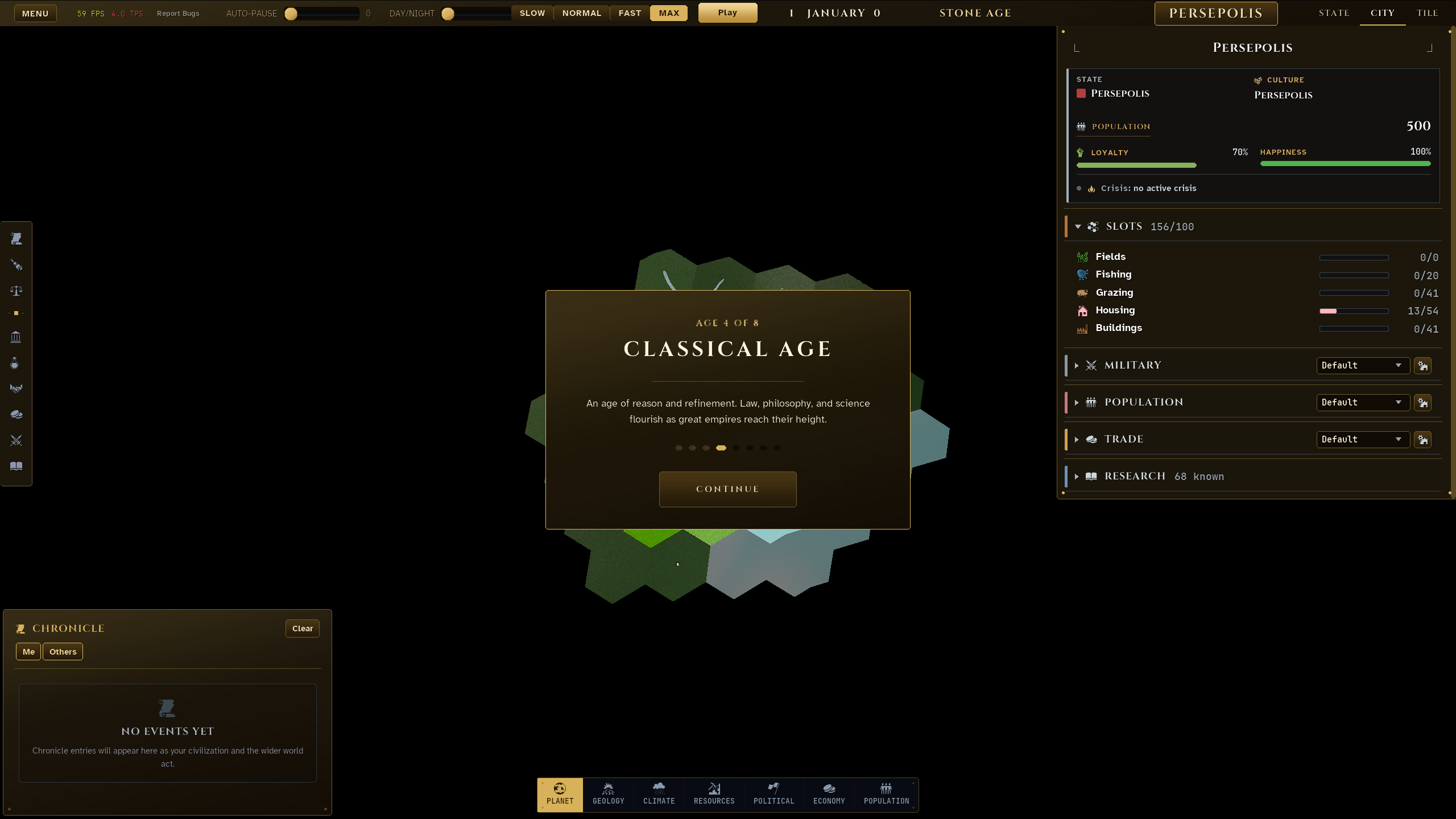
A civilization simulation prototype where geography and physics drive the rise and fall of empires. No gold, no research points, no abstract currencies of any kind. Population is the only currency, and every advantage traces back to a physical cause.
What is Orbis?
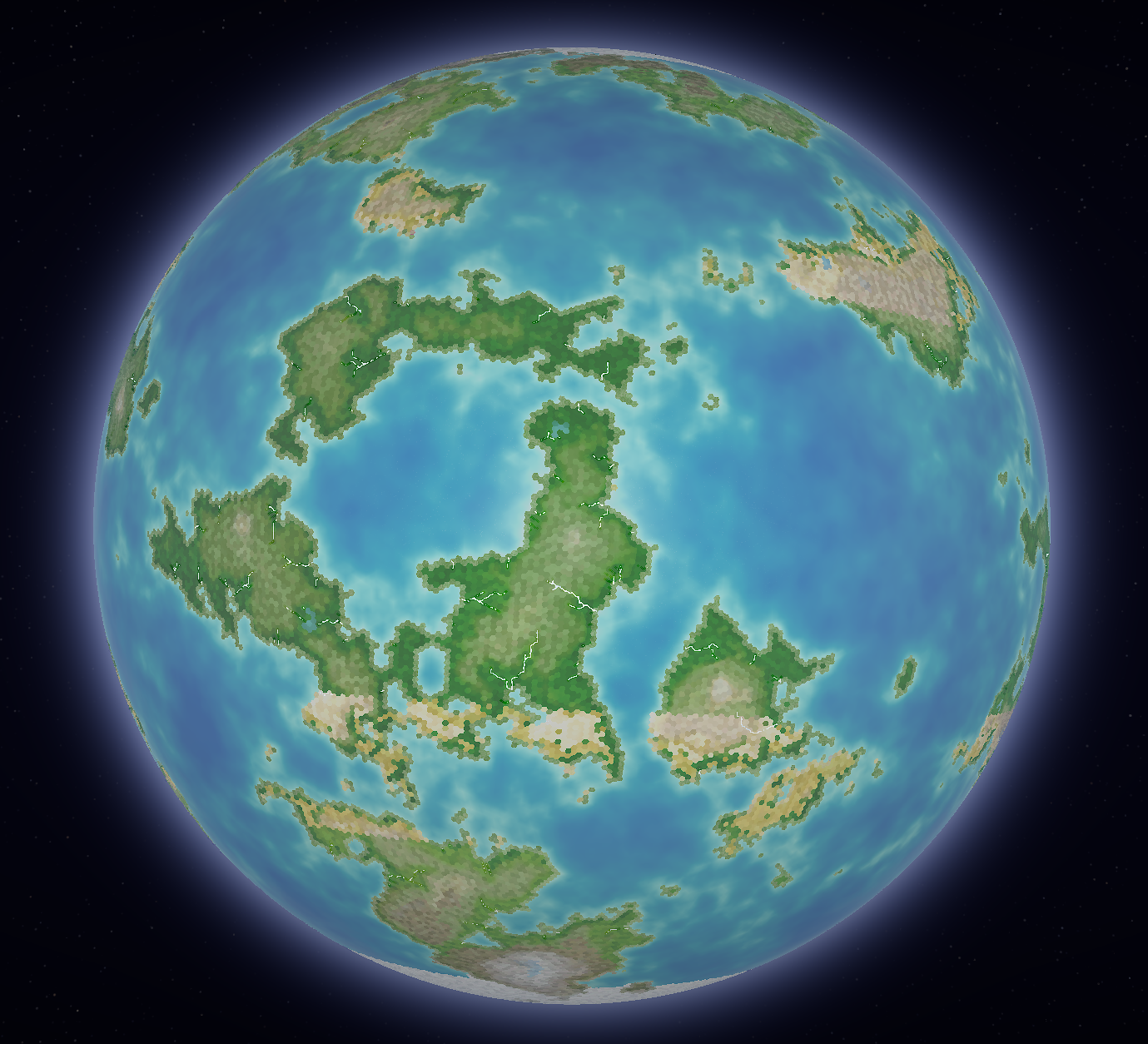
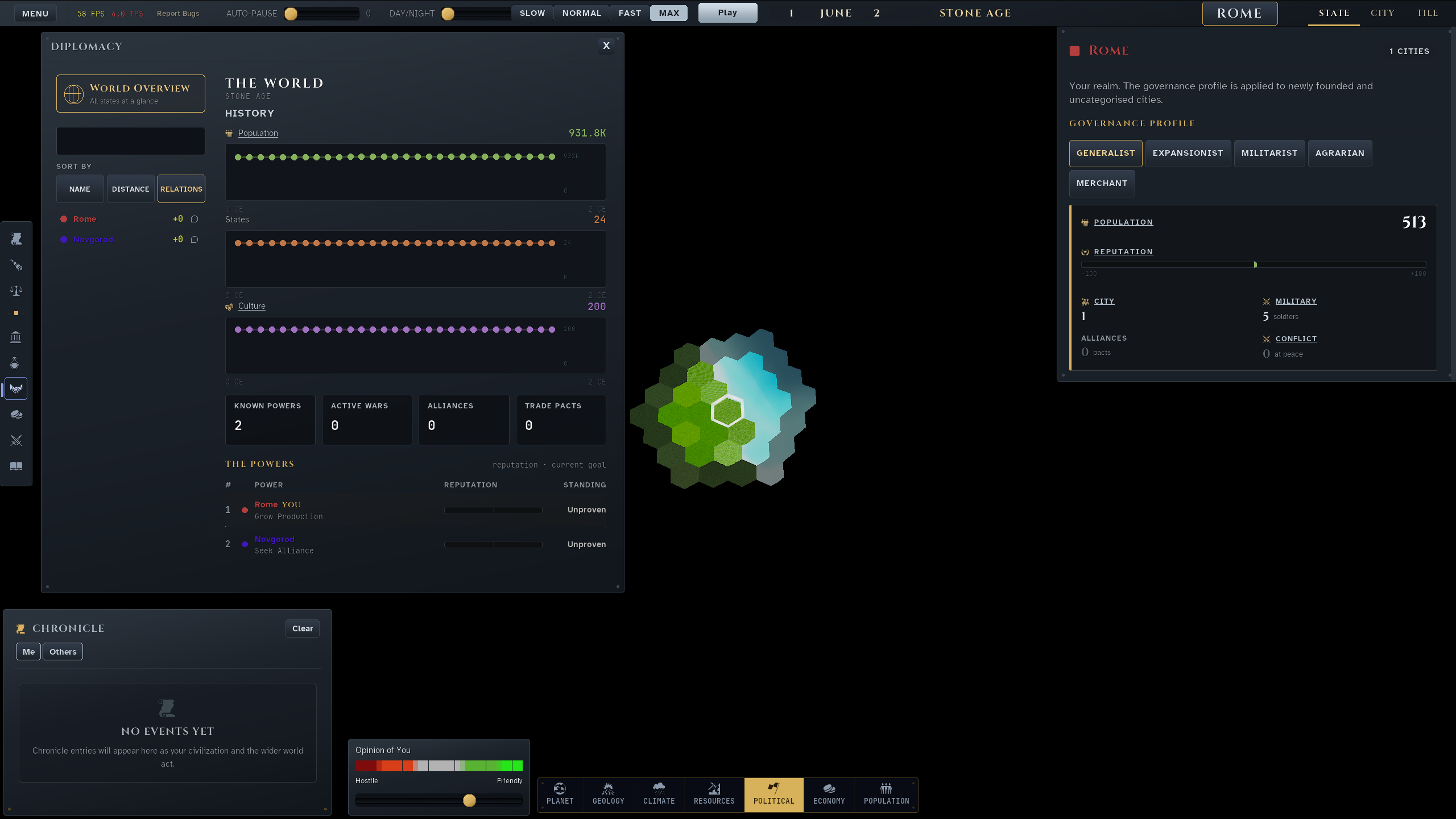
Orbis is an early prototype that generates emergent history on a procedurally generated planet with 163,842 hex tiles. Cities form from growing populations, expand across varied terrain, compete for territory, and trade through bilateral barter. You select a state to guide and influence its development through employment priorities, trade policies, and automation rules, then watch thousands of years of history unfold.
How it plays
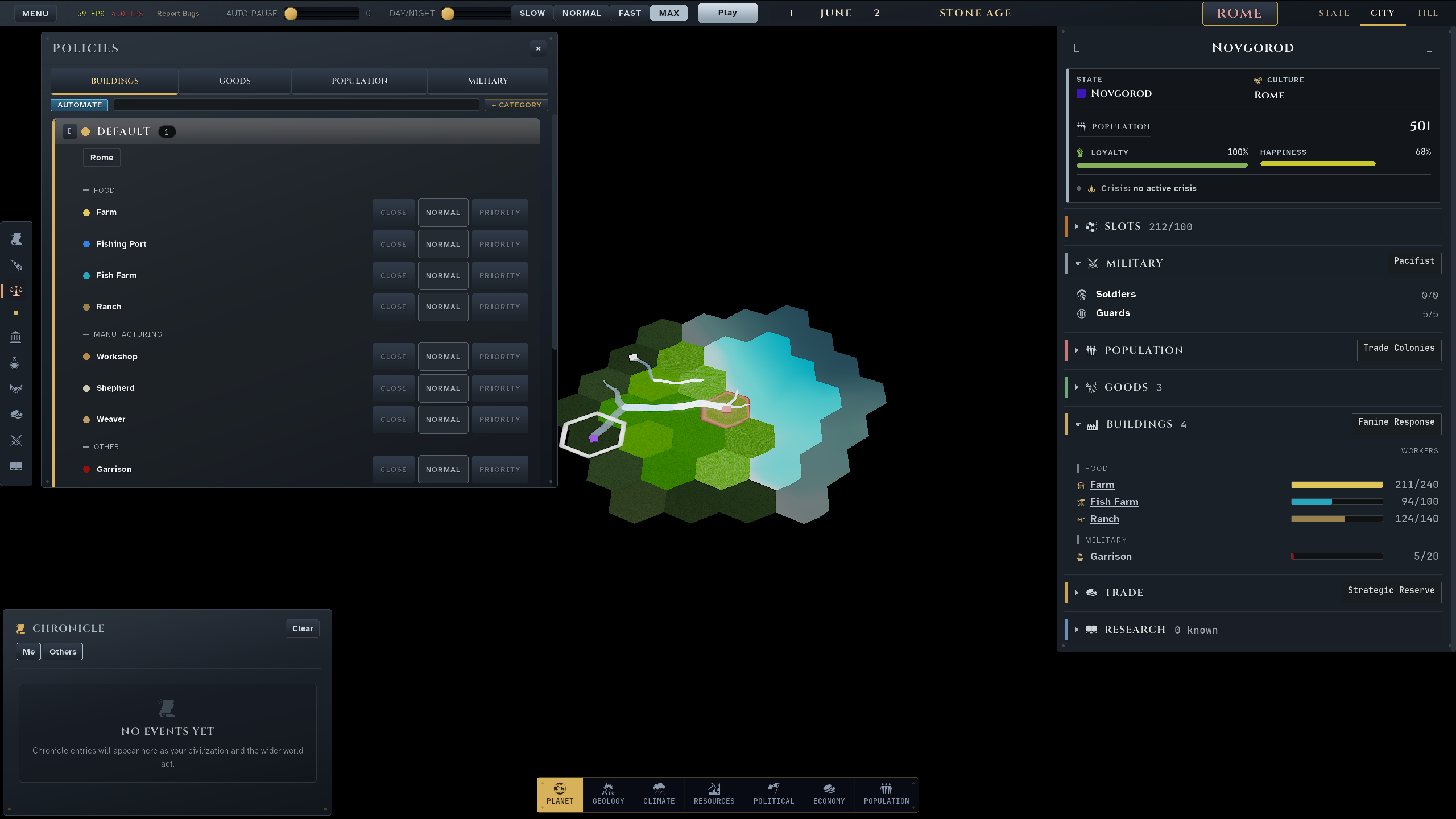
You influence rather than command. Set employment weights to prioritize food, mining, or military. Configure automation presets for groups of cities so you don't have to micromanage hundreds of them individually. Set trade policies and food conservation levels per city category. The system redistributes workers gradually based on your priorities and local conditions.
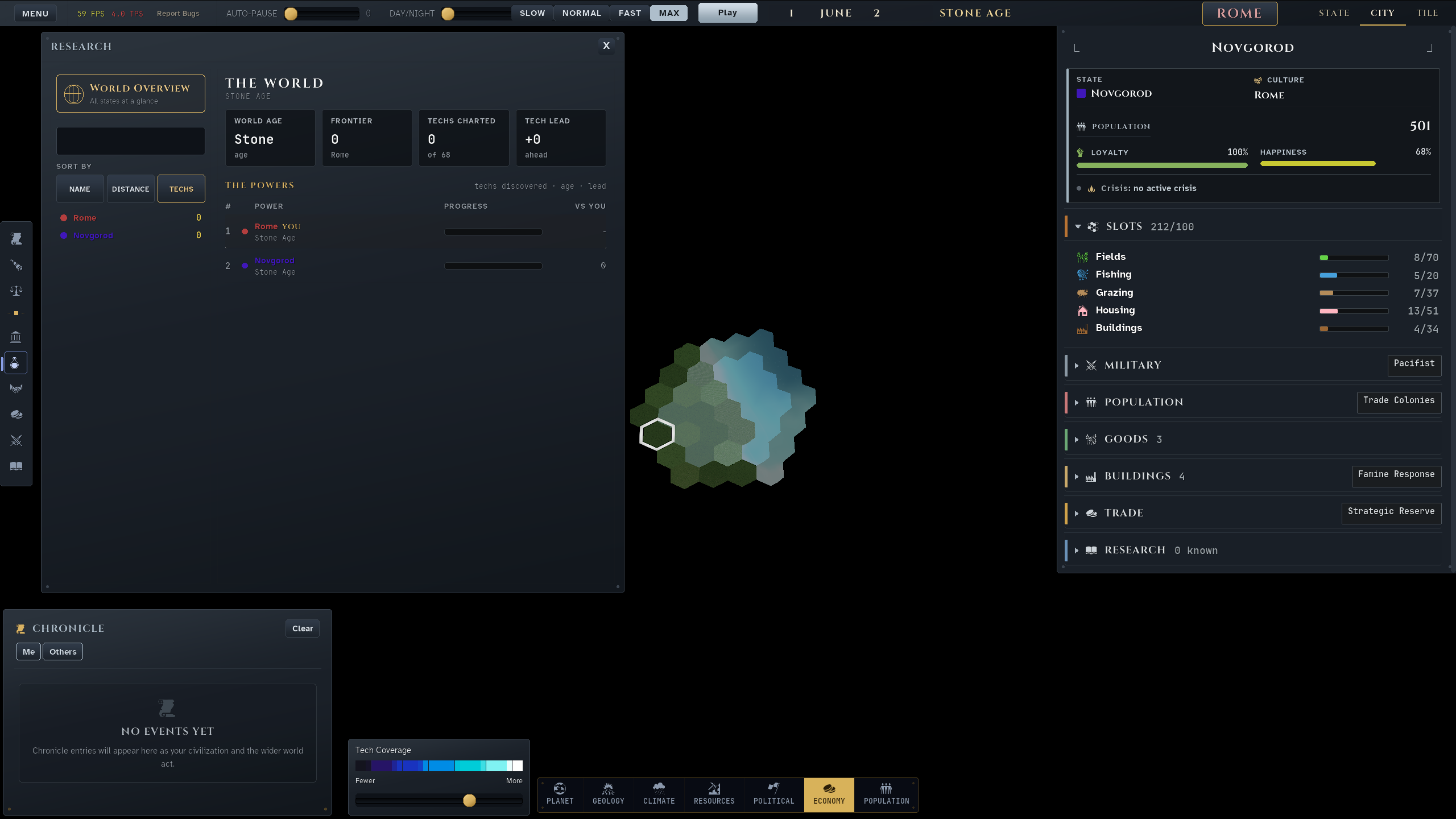
Technologies emerge from worker activities and environment. Send miners and mining tech advances. Position cities on fertile plains and agriculture develops faster. There is no research tree to click through.
What makes it different
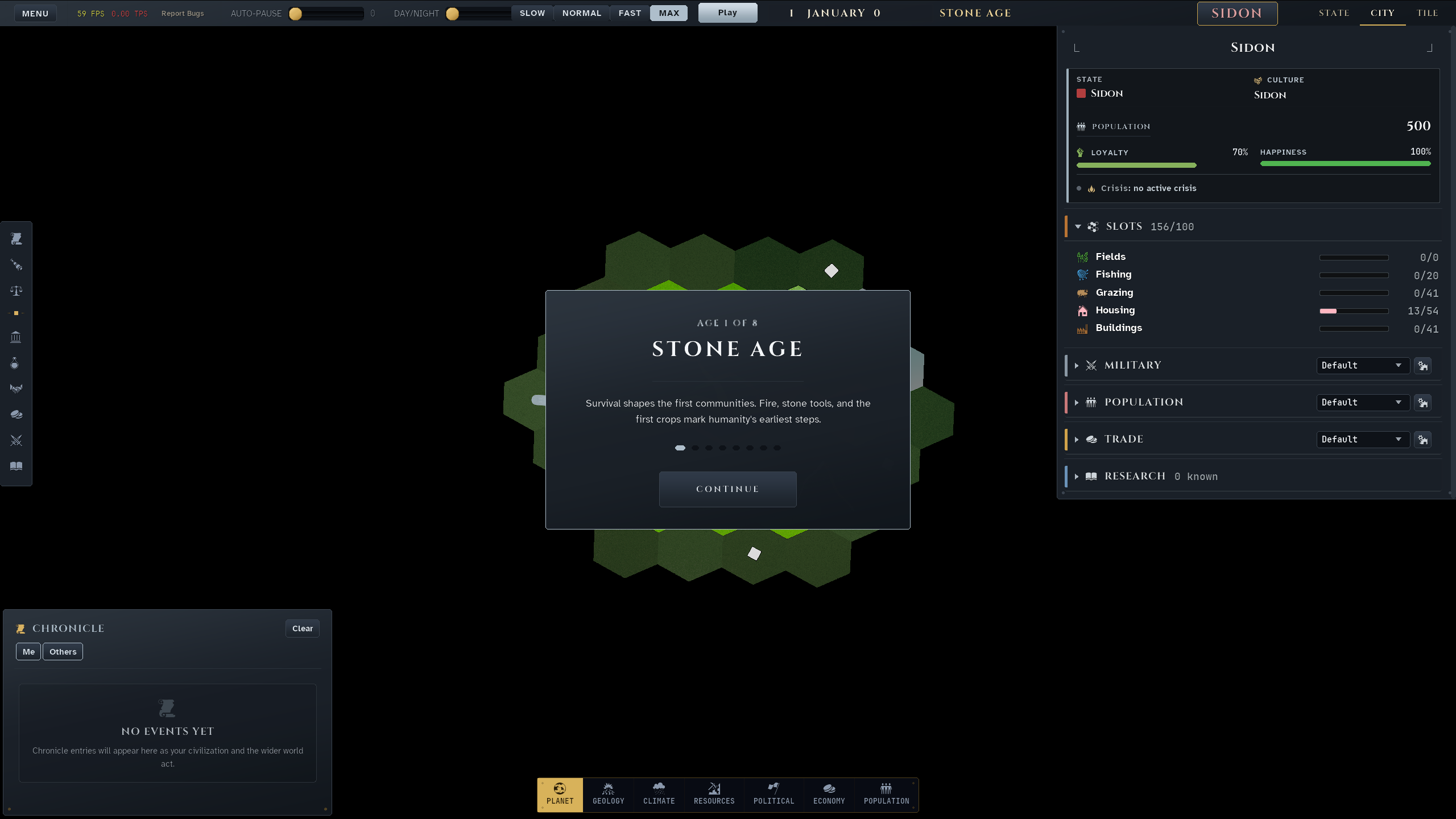
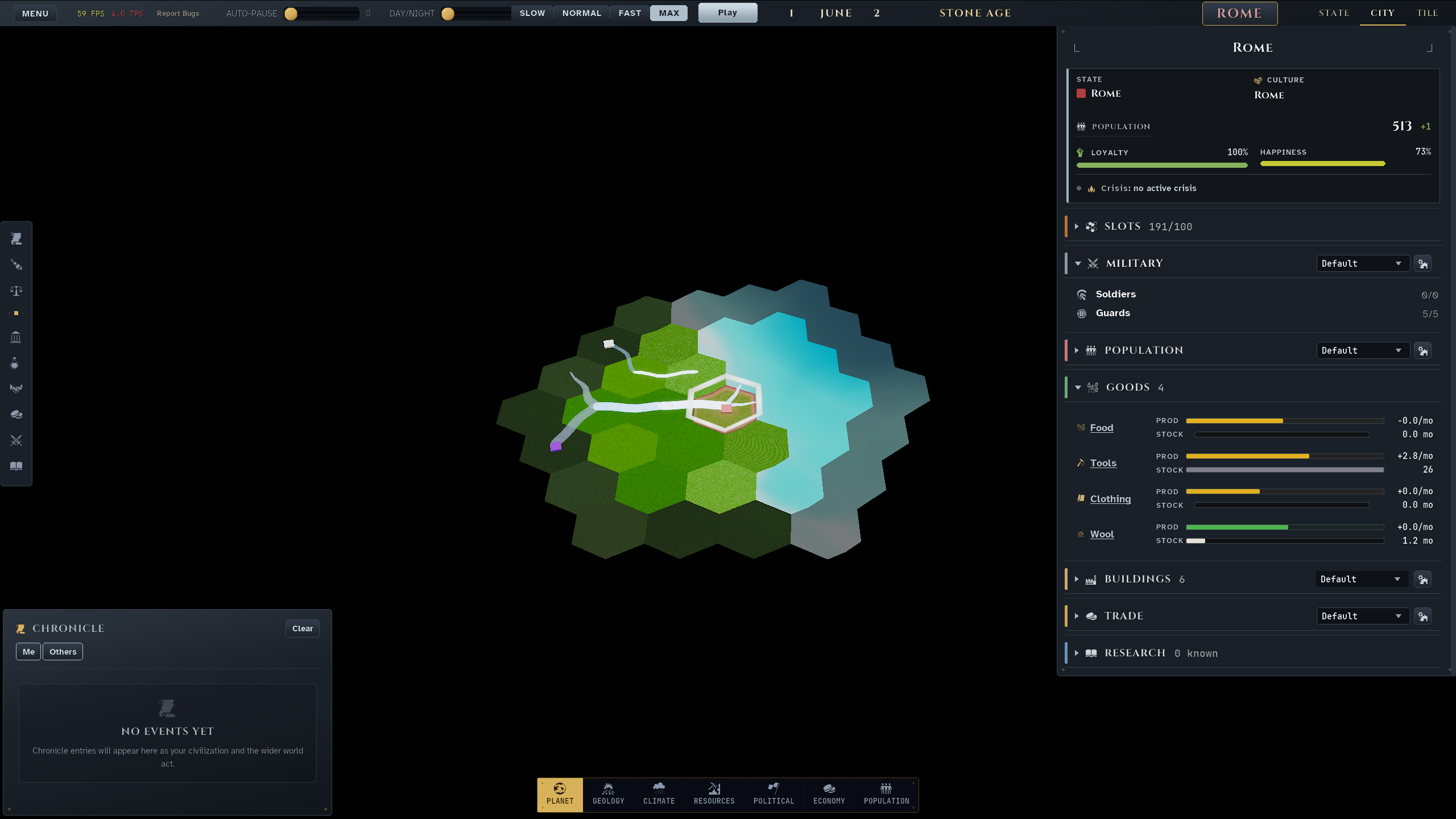
Every tile has 100 surface slots shared between housing, buildings, and natural resources. This zero-sum competition is the foundation of all city growth. More farms means less housing, more housing means more people who need more food. As cities fill up, efficient food sources mathematically squeeze out less productive ones, creating an emergent agricultural revolution with no scripted events.
Trade is pure barter. A mountain city with copper surplus but poor soil must find a farm city that needs metal. Geography creates specialization pressure, and isolated cities stagnate. Food decays over time, animals are living populations that hunters can deplete, and forests grow and shrink dynamically.
Features
- 163,842 hex tiles on a procedural icosphere planet (configurable 82K to 1.3M)
- Population as the only currency, with bilateral barter trade
- 5 climate-specific farm types, 6 mine types, workshops, and barracks
- Category automation system for managing large empires
- 11-mission tutorial across 7 independent tracks
- Dynamic alerts for food crises, population decline, and military threats
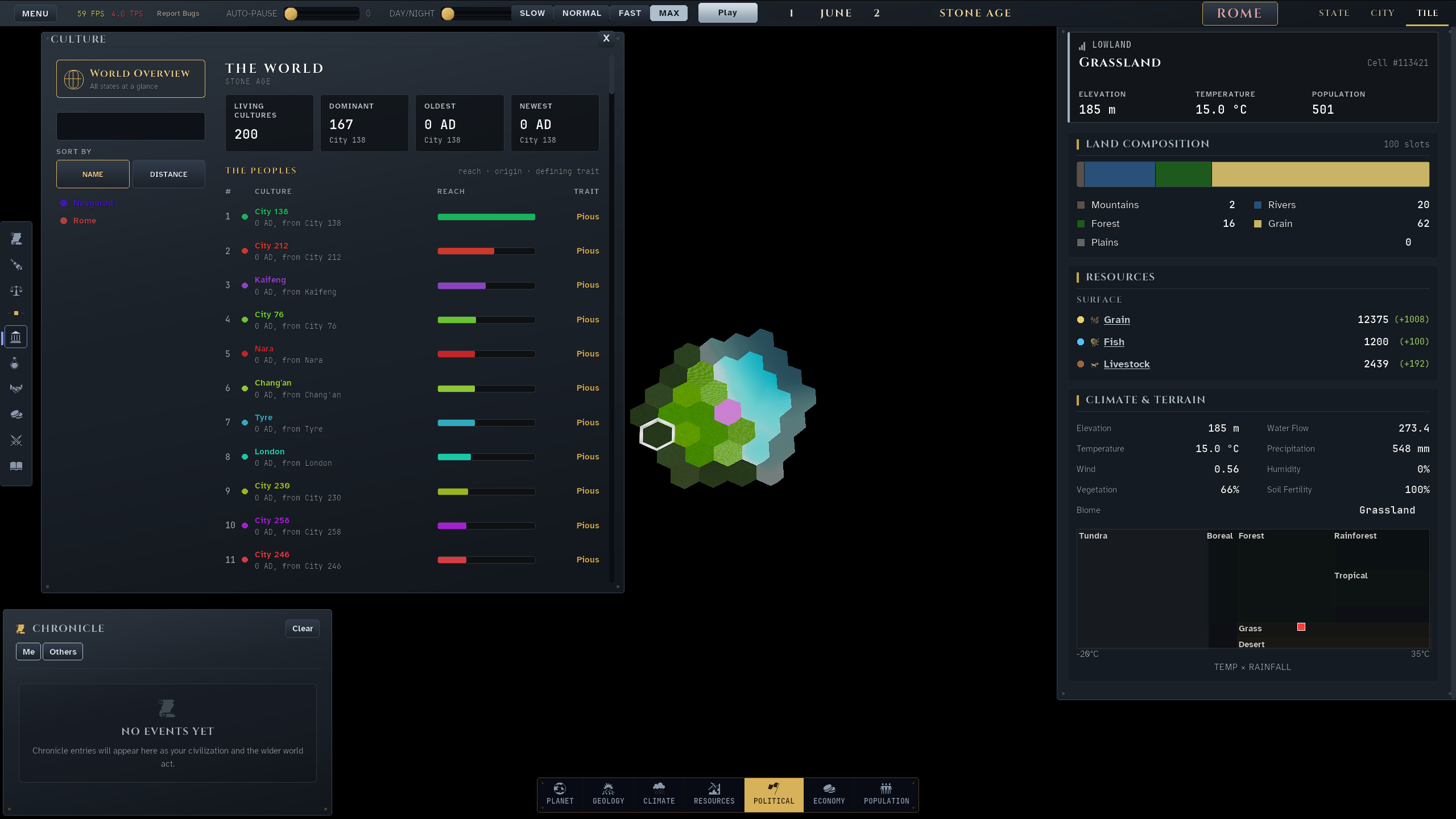
- Planet-wide overlays for population, production, trade routes, culture, and military
- Speed control from real-time observation to unlimited fast-forward
- Custom C++/Vulkan engine, 3 MB downloadable package
Current state
Orbis is a free early prototype. The core mechanics are in place and you can explore how the simulation works, but it's not a finished game yet. Think of it as a sandbox to poke at the systems and see if the ideas are interesting, not something to sink hours into. Feedback on what works, what's confusing, and what feels promising is incredibly valuable at this stage.
Discord: https://discord.gg/VTEGMu7YHx
Download
Development log
- V0.10: New UI22 days ago
- V0.9: AI behavior45 days ago
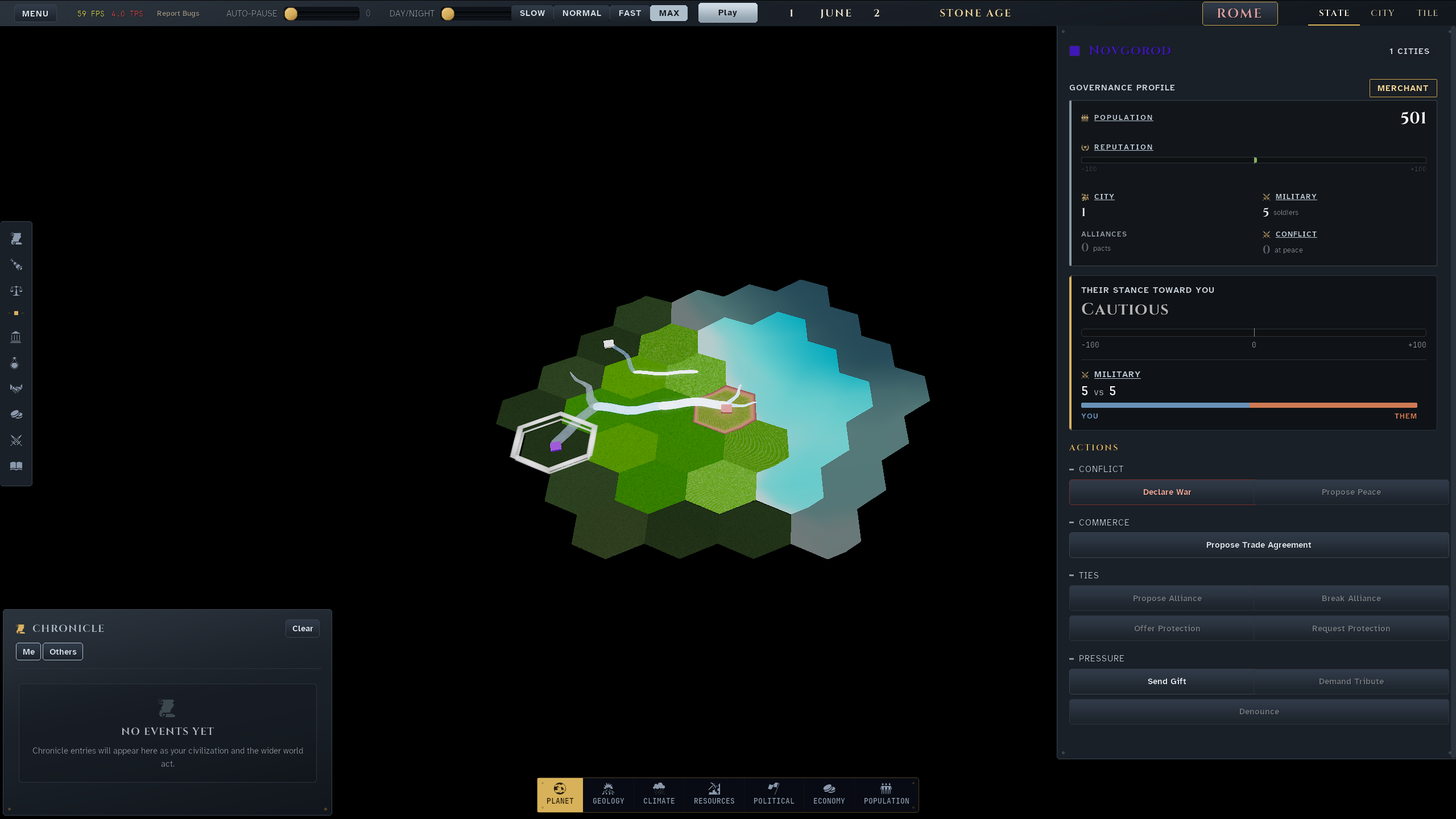
- V0.8: Diplomacy & Exploration63 days ago
- V0.7: Core gameplay loop92 days ago
- V0.6: Linux Build!96 days ago
- V0.5: Food Harvest & Geographic Constraint97 days ago
- V0.3: Tutorial & WarMar 27, 2026
- V0.2: Food Decay & Improved Player AgencyMar 21, 2026
Comments
Log in with itch.io to leave a comment.
Love a hex sphere :D
This is how it started! It doesn't really bring much more than a big 2D map and makes things more complicated, but I feel more immersed when playing on a planet than on a map